Pressure Up the Middle: Diagnosing the Panthers’ O-Line Issues
I’m not trying to continue the negativity surrounding the Carolina Panthers, but things clearly became more complicated with Ikem Ekwonu’s injury during the playoff loss. That injury leaves the offensive line in flux heading into 2026 and creates another major roster challenge.
At guard, the Panthers appear relatively set entering the season. Robert Hunt and Damien Lewis were very good signings and have largely performed to expectations. That said, a significant amount of cap space is now tied up in a position that is generally easier to replace than tackle. This points to a broader issue: the lack of successful drafting and development along the interior offensive line.
The Panthers attempted to address that pipeline with Chandler Zavala, but based on his performance, he has not proven to be a viable long-term option. In theory, guard should be one of the easier positions to fill because the college talent pool is larger. Many collegiate tackles lack the length or athleticism to remain outside in the NFL but can transition inside and perform at a high level.
At the very least, it is debatable whether Ekwonu would be better suited at left guard than left tackle. As a tackle, he profiles as a middle-of-the-pack starter. Inside, however, his power, athleticism, and temperament suggest the potential to become an elite player, similar to the role Quentin Nelson has played for the Colts. That possibility only reinforces the larger concern: Carolina has invested heavily in guard financially while failing to build sustainable depth through the draft.
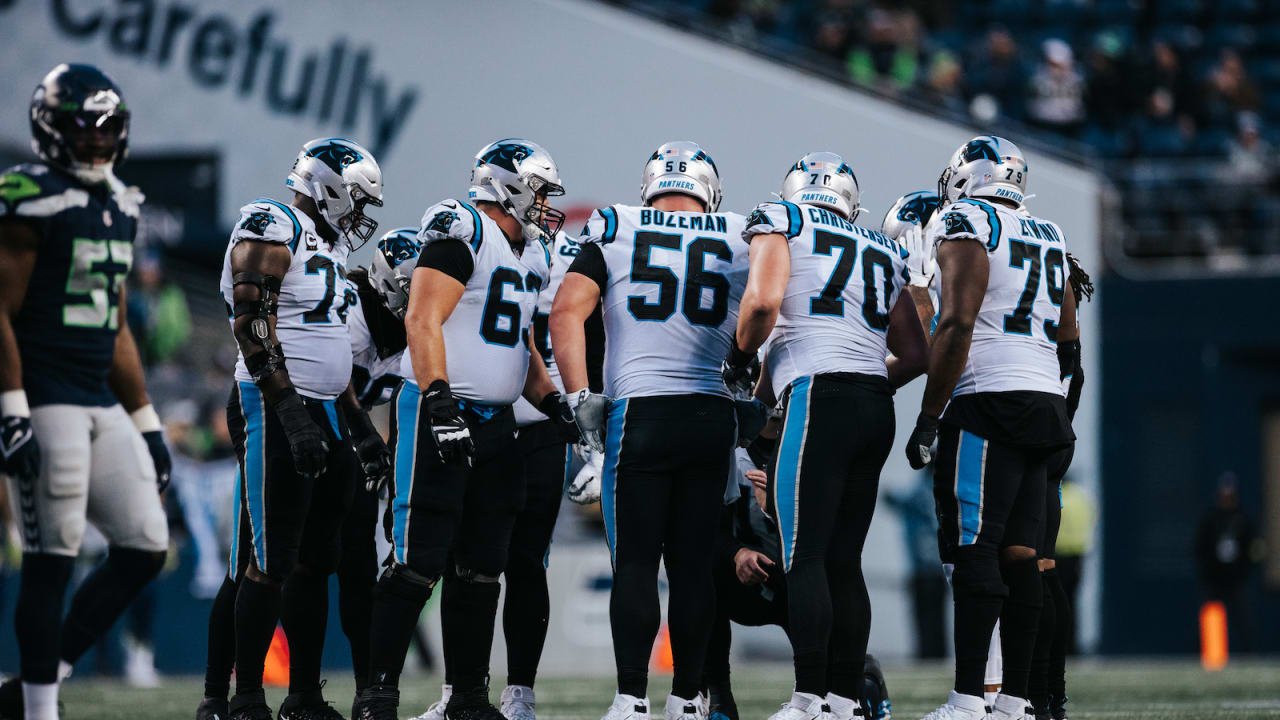
Center also remains an unresolved issue. Years after Ryan Kalil’s retirement, the Panthers still have not found a long-term answer at the position. Cade Mays’ asking price could determine whether he remains in Carolina, although Bryce Young does appear to play better with Mays snapping the ball. That observation may not be fully supported numerically, but it is my perception.
That frustration is compounded by recent draft decisions. Carolina passed on clear center solutions such as Jackson Powers-Johnson and Zach Frazier in favor of a running back coming off an ACL injury, who then suffered another ACL tear. In hindsight, that choice reflects a continued failure to prioritize the middle of the offensive line, particularly when reliable, long-term options were available.
Brady Christensen’s situation further complicates the depth chart. He will likely miss time early in the season following the injury he sustained in 2025, but the larger issue is contractual. Christensen is not currently under contract, and negotiating a new deal while accounting for both his injury and uncertain availability presents a difficult evaluation for the front office.
Which brings the conversation back to tackle. Given Taylor Moton’s situation, the Panthers already needed to address the position early in the draft. Ekwonu’s injury now accelerates that urgency. They may be forced to use a first-round pick at tackle or turn to free agency, where quality starters are neither cheap nor easily replaceable.
Moton is expected to return in 2026, but this will likely be his final year with the organization. That reality adds another dimension to Ekwonu’s long-term outlook. Beyond the ongoing discussion about his fit at left tackle or guard, Ekwonu should also be considered a potential long-term replacement for Moton at right tackle. Again, his power, athletic profile, and experience on the edge could make that transition viable, particularly if Carolina drafts a new blindside protector. Failing to plan for that succession risks keeping the offensive line in a constant state of transition rather than building a stable, cost-controlled unit through development.